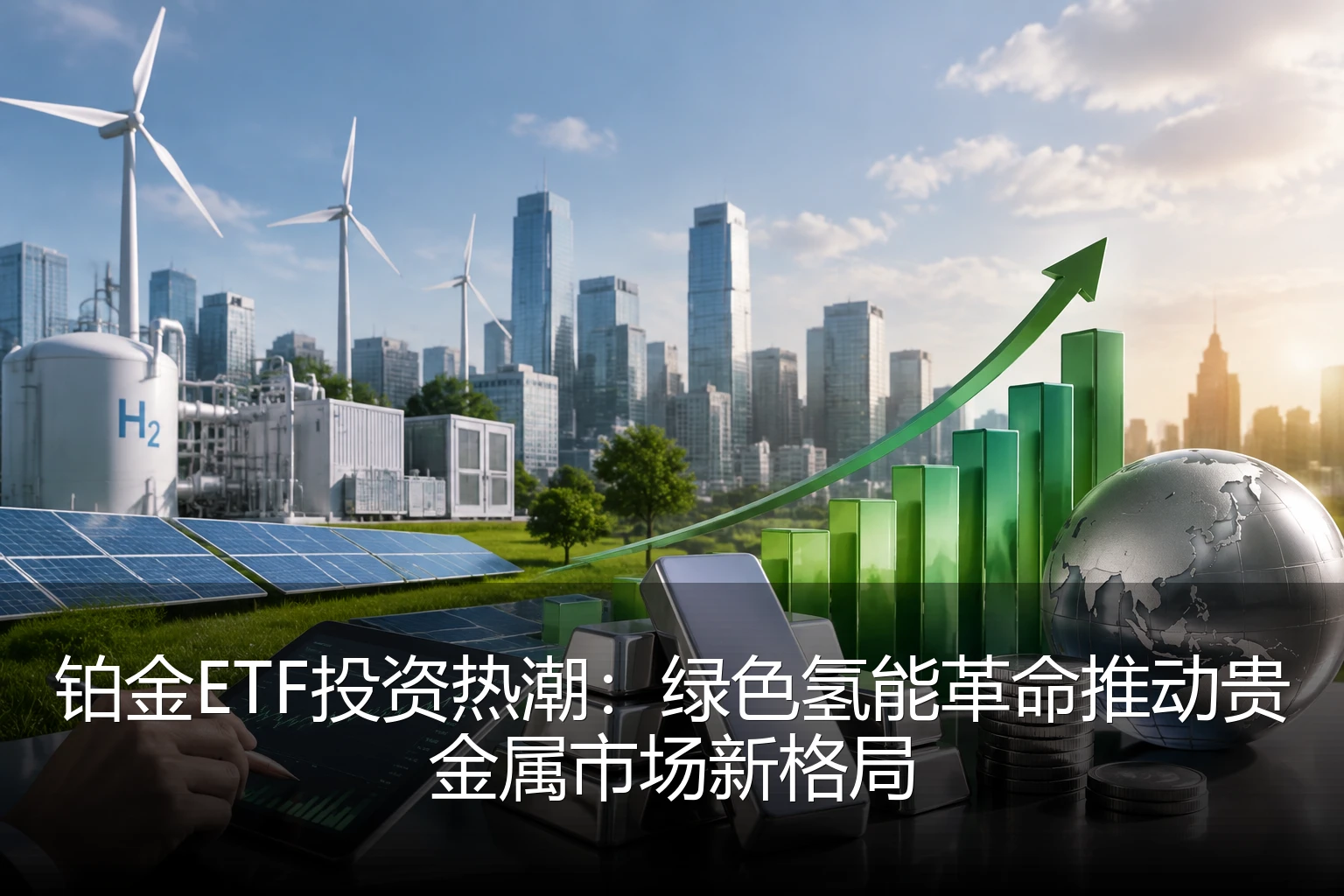
Platinum ETF investment boom: green hydrogen revolution reshapes precious metals market
In August 2026, the global precious metals market is undergoing a structural transformation driven by the green energy transition. Within this shift, platinum ETFs (exchange-traded funds) stand out as a focus of investor attention. As countries accelerate carbon neutrality goals, the rapid development of green hydrogen technology is significantly boosting platinum demand, pushing platinum ETF assets to record highs.
Platinum market reaches a historic turning point
According to latest market data, platinum prices broke above $1,200/oz in H1 2026, a five-year high. This price move differs from traditional precious metals cycles, indicating a structural shift in the platinum market. Notably, net inflows into platinum ETFs reached a record $1.8 billion in Q2, far exceeding the same period last year, showing markedly higher investor recognition of platinum's long-term value.
"The platinum market is undergoing a demand-driven revolution," said Suthiporn Chaiyaporn, a Bangkok precious metals analyst. "Traditional jewelry and auto catalyst demand remain important, but demand growth from green hydrogen is becoming the main market driver."
Green hydrogen: the new engine of platinum demand
Green hydrogen is seen as a key area of future energy transition, and platinum, as an indispensable catalyst in water electrolysis for hydrogen production, is growing in strategic importance. In proton exchange membrane (PEM) electrolyzers, platinum efficiently promotes water splitting to produce high-purity hydrogen. As countries increase investment in hydrogen infrastructure, platinum demand is expected to maintain strong growth.
A latest International Energy Agency (IEA) report shows that by 2030, global hydrogen industry platinum demand could reach 80-100 tonnes per year, accounting for 15%-20% of total platinum demand. This forecast is nearly triple the 2020 estimate, reflecting the accelerating impact of hydrogen technology on the platinum market.
"The hydrogen economy is reshaping the platinum market," said Thanaphon Varanatanaporn, head of precious metals research at the Bank of Thailand. "Thailand, as an important hydrogen development center in Southeast Asia, is actively building related industrial chains, which will create more opportunities for domestic investors to participate in platinum ETFs."
Platinum ETF market dynamics and investment strategies
Facing structural changes in the platinum market, global ETF issuers are launching innovative platinum-focused products. Data show the number of newly launched platinum ETFs globally rose 45% year on year in H1 2026, with assets under management (AUM) exceeding $12 billion, a record high. In Asia, the platinum ETF product launched by Thai precious metals ETF platform ThaiETF.Asia has been especially favored by investors, with AUM growing 300% in six months.
For Thai investors, platinum ETFs offer a convenient channel to participate in the global platinum market. Compared with physical platinum investment, platinum ETFs have advantages such as high liquidity, low transaction costs, and no storage security concerns. In addition, platinum ETFs typically adopt a physical-backed model, ensuring asset value is directly linked to platinum prices and providing a transparent, reliable investment tool.
"Platinum ETFs provide Thai investors with an ideal way to participate in the global green economy transition," said Anucha Suwannapong, CEO of ThaiETF.Asia. "Our platform not only offers a diversified selection of platinum ETF products, but also provides professional market analysis and investment guidance to help investors seize platinum market opportunities."
Market outlook and risk factors
Despite the bright prospects for platinum ETFs, investors should still pay attention to related risks. First, platinum prices are highly volatile, affected by global economic conditions, geopolitical risks, and substitute technology developments. Second, the platinum supply chain is concentrated, with over 70% of global platinum production concentrated in South Africa and Russia; political and economic stability in these regions significantly affects platinum prices.
In addition, investors should watch hydrogen technology substitution risks. Although PEM electrolyzers currently rely on platinum catalysts, researchers are developing technologies to reduce platinum usage and even exploring alternative materials that could replace platinum entirely. Such breakthroughs could affect platinum demand over the long term.
"For long-term investors, platinum ETFs remain attractive," said Wirachai Thongcharoen, finance professor at Chulalongkorn University. "The green hydrogen industry's development is a long-term process, and platinum's strategic position is unlikely to be replaced in the short term. Investors should adopt a long-term investment strategy and focus on platinum's core value in the energy transition."
How Thai investors can participate
Thai investors can participate in the platinum ETF market through several channels. First, directly buying platinum ETF products via local Thai ETF trading platforms such as ThaiETF.Asia is the most convenient way. Second, investors can also access global platinum ETF markets through international brokers, but should consider exchange rate risk and cross-border transaction costs.
For investors with different risk appetites, experts suggest differentiated strategies. Conservative investors can include platinum ETFs as part of asset allocation, with a weight not exceeding 5%-10% of the portfolio; aggressive investors bullish on green energy transition can appropriately raise the allocation, but it is recommended to keep it below 20% and closely monitor market developments.
"Thai investors should fully consider their own risk tolerance and investment goals when participating in the platinum ETF market," advised Suthiporn Chaiyaporn. "At the same time, we suggest regularly evaluating platinum's performance in the portfolio and adjusting strategies in line with market changes."
Conclusion: seize the platinum opportunity in the green energy transition
As the global green energy transition deepens, platinum's strategic value as a key material for green hydrogen technology will continue to rise. Platinum ETFs, as a convenient tool for investing in the platinum market, are gaining increasing favor among investors. For Thai investors, seizing platinum ETF opportunities not only allows them to share in the dividends of the green energy transition but also achieves portfolio diversification and reduces overall risk.
In the coming years, as hydrogen technology matures and commercial applications expand, the platinum market is expected to enjoy broader development space. Investors should closely track hydrogen industry policy trends, technological progress, and market demand changes, adjust strategies in a timely manner, and capture platinum's long-term investment value amid the green energy revolution.
"Platinum ETFs represent a new direction in precious metals investment, closely combining traditional precious metals with the modern green economy," concluded Thanaphon Varanatanaporn. "Thailand, as an important financial center in ASEAN, has the conditions and capability to become a hotspot for platinum ETF investment, creating more value for investors."