
Precious Metals News
Platinum ETF Investment Trend Resumes: Green Hydrogen Revolution Drives New Landscape in Platinum Metals Market
In August 2026, the platinum ETF market welcomes a new wave of growth, with capital inflow reaching a new record high for the year. Behind this trend is the accelerated progress of the green hydrogen revolution, as platinum, a core material for hydrogen fuel cells, sees surging demand. Simultaneously, global platinum supply continues to be scarce, compounded by geopolitical risks and expectations regarding US Federal Reserve policy, jointly pushing platinum prices to a new high since 2021. This
August 14, 2026
·
181 reads
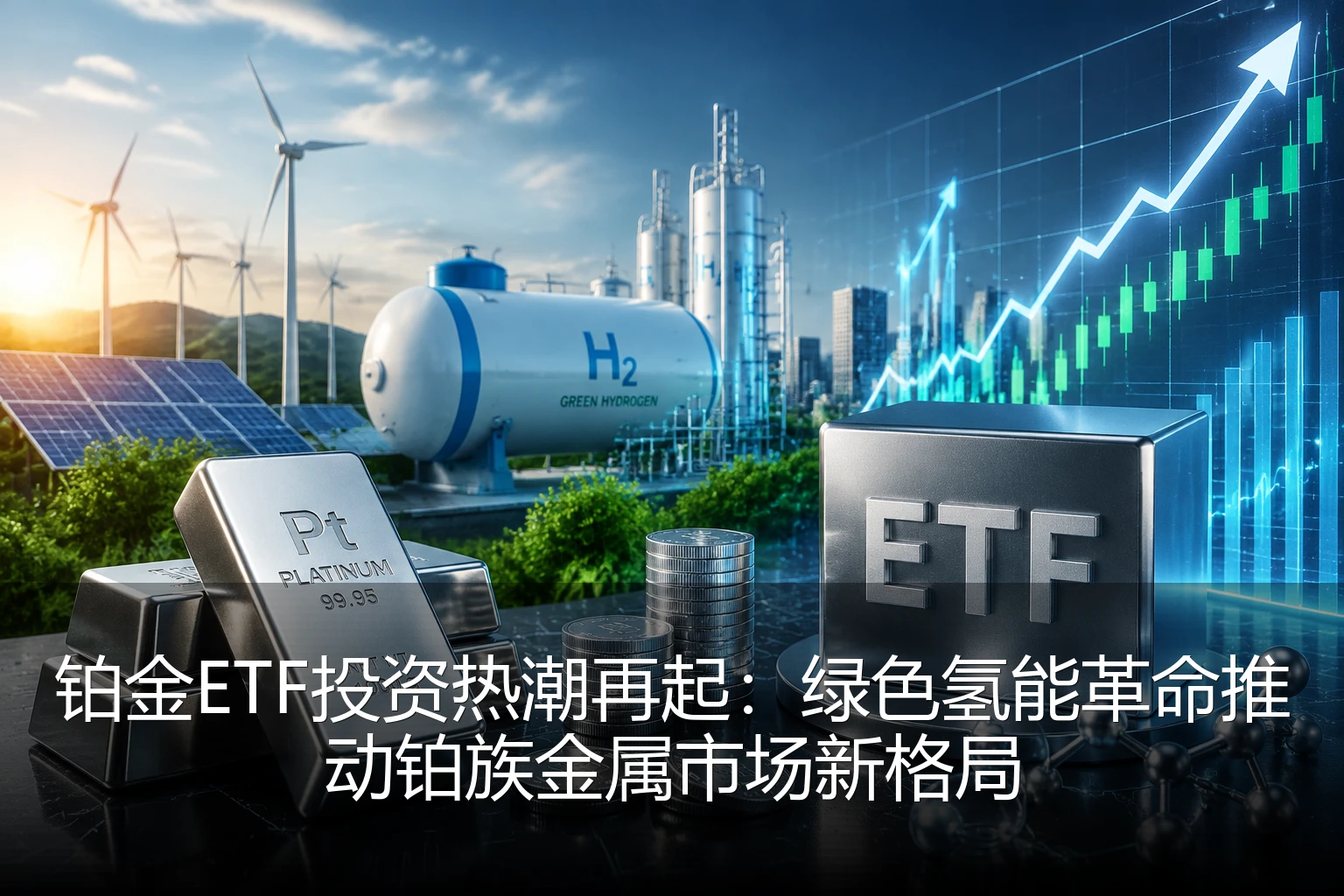
Platinum ETF Investment Surge Resumes: Green Hydrogen Revolution Reshapes the Platinum Group Market
In August 2026, the precious metals market undergoes a structural change, and Platinum ETFs, as a "dark horse" stock, are attracting investor attention at an astonishing pace. According to the latest data, the inflow of global Platinum ETF funds reached $4.5 billion in the first half of the year, a 67% increase compared to the same period last year, setting a new record since 2018. This growth not only breaks the historical record for Platinum ETFs but also reflects the profound reshaping of the precious metals market by the green hydrogen revolution—platinum, a precious metal that had fallen due to declining demand for automotive catalysts, is now becoming a "hot commodity" in the capital market due to its core position in the hydrogen energy sector.
I. The "Reversal" of Platinum ETFs: Capital Flow from Margin to Core
Platinum has long held a marginal position within the precious metals family. Over the past decade, influenced by factors such as stricter vehicle exhaust emission standards and shrinking diesel car demand, the demand for platinum in the automotive catalyst sector has continuously declined, and its price has remained low. However, the explosive growth of green hydrogen since 2024 has completely changed this landscape. The proliferation of Fuel Cell Electric Vehicles (FCEVs) and fixed hydrogen power plants has made platinum an indispensable catalyst in the hydrogen conversion process—each FCEV requires about 30-40 grams of platinum, while a 100 MW hydrogen power plant requires over 1 ton of platinum. This increase in demand has led to a 32% surge in platinum ETF holdings in the first half of 2026, far exceeding the growth rates of Gold ETFs (+12%) and Silver ETFs (+18%).
The Thai market is a microcosm of this trend. As a key participant in the ASEAN hydrogen industry, the Thai government launched the "Hydrogen 2030" strategy in 2025, aiming for 10% of energy consumption to be from hydrogen by 2030. This policy directly drove demand for Thai Platinum ETFs: since the listing of the first Platinum ETF in Thailand (Thai Platinum ETF) in December 2025, the assets under management has grown from an initial 500 million Thai Baht to 1.8 billion Thai Baht, with retail investors accounting for 65%, demonstrating strong investor interest in Platinum ETFs in Thailand. Analysts point out that Thai investors favor Platinum ETFs for two reasons: the growth logic driven by industrial demand, and the unique advantage of platinum in terms of safe-haven properties—compared to gold, platinum has greater price elasticity and its linkage to the hydrogen industry gives it long-term growth potential.
II. Green Hydrogen: The "Engine" for Platinum Demand Growth
The rise of green hydrogen is the core driving force behind the surge in platinum demand. According to the latest report from the International Energy Agency (IEA), global hydrogen demand will reach 180 million tons by 2030, a threefold increase from 2025, with the market share for hydrogen fuel cell vehicles rising from the current 1% to 15%. This growth will directly pull platinum demand: approximately 0.5 grams of platinum is needed as a catalyst to produce 1 ton of hydrogen, and the expansion of the global hydrogen industry will increase platinum demand by 120 tons by 2030, equivalent to 15% of the current global annual platinum production. Policy support is an accelerator for green hydrogen development. The EU's "Fit for 55" plan positions hydrogen as a core element of energy transition, planning to deploy 40 gigawatts of hydrogen power generation capacity by 2030. China's 14th Five-Year Hydrogen Plan proposes building 100 hydrogen refueling stations by 2025 and achieving 50,000 hydrogen vehicle ownership by 2025. The US Inflation Reduction Act (IRA) provides subsidies of $3 per kilogram for hydrogen projects, promoting the scaling up of the hydrogen industry. These policies not only reduce the cost of hydrogen but also directly increase the demand for platinum—for example, the EU's hydrogen strategy is projected to increase platinum demand by 80 tons by 2030, becoming a major source of global platinum demand growth.
In Thailand, the development of the hydrogen industry provides a localization growth logic for the platinum ETF. Thailand's National Oil Company (PTT) and Toyota Japan plan to build 10 hydrogen refueling stations by 2027 and launch hydrogen fuel cell buses. The Electricity Generating Authority of Thailand (EGAT) plans to construct two 100 MW hydrogen power plants by 2028. These projects will directly drive demand for platinum in Thailand, making the platinum ETF one of the best tools for investors to share in the hydrogen dividend.
## III. Supply Shortage: The "Bottom Support" for Platinum Price Rise
Compared to the rapid growth in demand, the supply side of platinum faces severe challenges. Global platinum mine production has declined for five consecutive years, with production from the main producing country, South Africa, dropping from 138 tons in 2018 to 110 tons in 2025, while production from Russia decreased by 15% due to sanctions, and production growth in countries like Zimbabwe and Canada has been sluggish. Furthermore, the recovery and utilization rate of platinum is very low—only about 25% of global platinum comes from recycling, far below the 85% for gold and 60% for silver. This supply-demand imbalance has caused platinum prices to continue rising in 2026: As of August 14, platinum prices have reached $1250 per ounce, a new high since 2021, an increase of 32% from the beginning of 2025, even surpassing the price of silver (currently around $22 per ounce).
Analysts point to three main reasons for the platinum supply shortage: first, mine aging, where platinum mines in major producing countries like South Africa and Russia are entering the later stages of extraction, leading to declining grades and rising extraction costs; second, extraction restrictions, where the South African government restricts the scale of platinum mining to protect the environment; third, insufficient substitute materials. Although researchers are developing substitutes for platinum (such as palladium and nickel), they cannot fully replace platinum's application in the hydrogen sector in the short term. These factors collectively lead to a platinum supply deficit expanding to 30 tons in 2026, projected to reach 50 tons by 2030, becoming the core support for the long-term rise in platinum prices.
## IV. US Monetary Policy and Geopolitical Risks: The "Safe-Haven Attribute" of the Platinum ETF
Besides industrial demand, the safe-haven attribute of the platinum ETF is a key factor attracting investors. The US Federal Reserve's monetary policy is expected to have a significant impact on precious metal prices. Recently, the Federal Reserve signaled dovish tones, with market expectations for a September rate cut reaching 80%, which lowers the opportunity cost of holding precious metals, driving platinum prices up. Simultaneously, geopolitical risks (such as escalating Middle East tensions and the ongoing Russia-Ukraine conflict) have strengthened the safe-haven demand for platinum—investors view platinum as a tool to hedge against inflation and currency devaluation, especially amid increasing global economic uncertainty. In the Thai market, the hedging attribute of gold ETFs is particularly evident. Due to significant fluctuations in the Thai baht exchange rate (the Thai baht depreciated by 5% against the US dollar in the first half of 2026), gold ETFs have become an important tool for investors to diversify exchange rate risk. Data shows that the proportion of Thai investors holding gold ETFs increased by 40% compared to last year, with 60% of investors allocating gold ETFs as part of their long-term asset allocation rather than as a short-term speculative tool. This phenomenon reflects the recognition by Thai investors of the "dual nature" of gold ETFs: they possess growth potential driven by industrial demand and safety margins as a safe-haven asset.
## Five, Market Outlook: Investment Opportunities and Risks of Gold ETFs
Looking ahead, the gold ETF market still has significant growth potential. On one hand, the development of green hydrogen energy will continue to drive demand for gold—the IEA predicts that the hydrogen industry will boost gold demand by 120% by 2030. On the other hand, supply shortages and safe-haven demand will support gold prices, giving it the potential for long-term increases. However, investors must also pay attention to the risks: First, breakthroughs in hydrogen technology could reduce demand for gold, for example, researchers are developing platinum-free catalysts, which, if successful, will significantly reduce the demand for platinum. Second, a shift in the US Federal Reserve policy towards hawkish stances could lead to a pullback in precious metal prices. Third, a global economic recession could suppress investment in the hydrogen industry, thereby affecting gold demand.
For Thai investors, gold ETFs are a worthy investment product to watch. As the Thai hydrogen industry develops, the potential returns of gold ETFs will gradually become apparent. Simultaneously, investors should pay attention to indicators such as the ETF's holding structure (such as whether physical gold is held) and expense ratios (such as management fees, custody fees) to choose well-managed products. For example, the management fee for the Thai Platinum ETF is 0.5%, lower than the industry average of 0.8%, and the proportion of physical gold held in the portfolio is 95%, indicating high transparency.
In summary, the rise of gold ETFs is a product of the green hydrogen revolution and structural changes in the precious metals market. For investors, gold ETFs are not only a tool for sharing the benefits of the hydrogen energy revolution but also a safe-haven asset with long-term growth potential. Against the backdrop of increasing global economic uncertainty, gold ETFs are poised to become the "new favorite" in investor asset allocation.
All content on this website is for study and exchange purposes only. We do not provide financial services including account opening, leveraged trading, discretionary asset management or insider trading. Do not trust any private messages on this site that recommend stocks or guide trading operations.
# Precious Metals Investment Strategy
# Precious Metals Market Analysis
# Precious Metal ETF Holdings
# Thailand Precious Metals ETF
# Platinum & Palladium Market
# Precious Metals Macroeconomics
# Precious Metal Fund Flow
# Platinum ETF
Previous
In-depth Analysis of the Precious Metals Market: The Gold-Silver-Platinum Trio, Investment Strategy and Outlook for August 2026
NextASEAN Silver ETF Market Experiences Explosive Growth: Green Energy Transition Drives Investment Boom