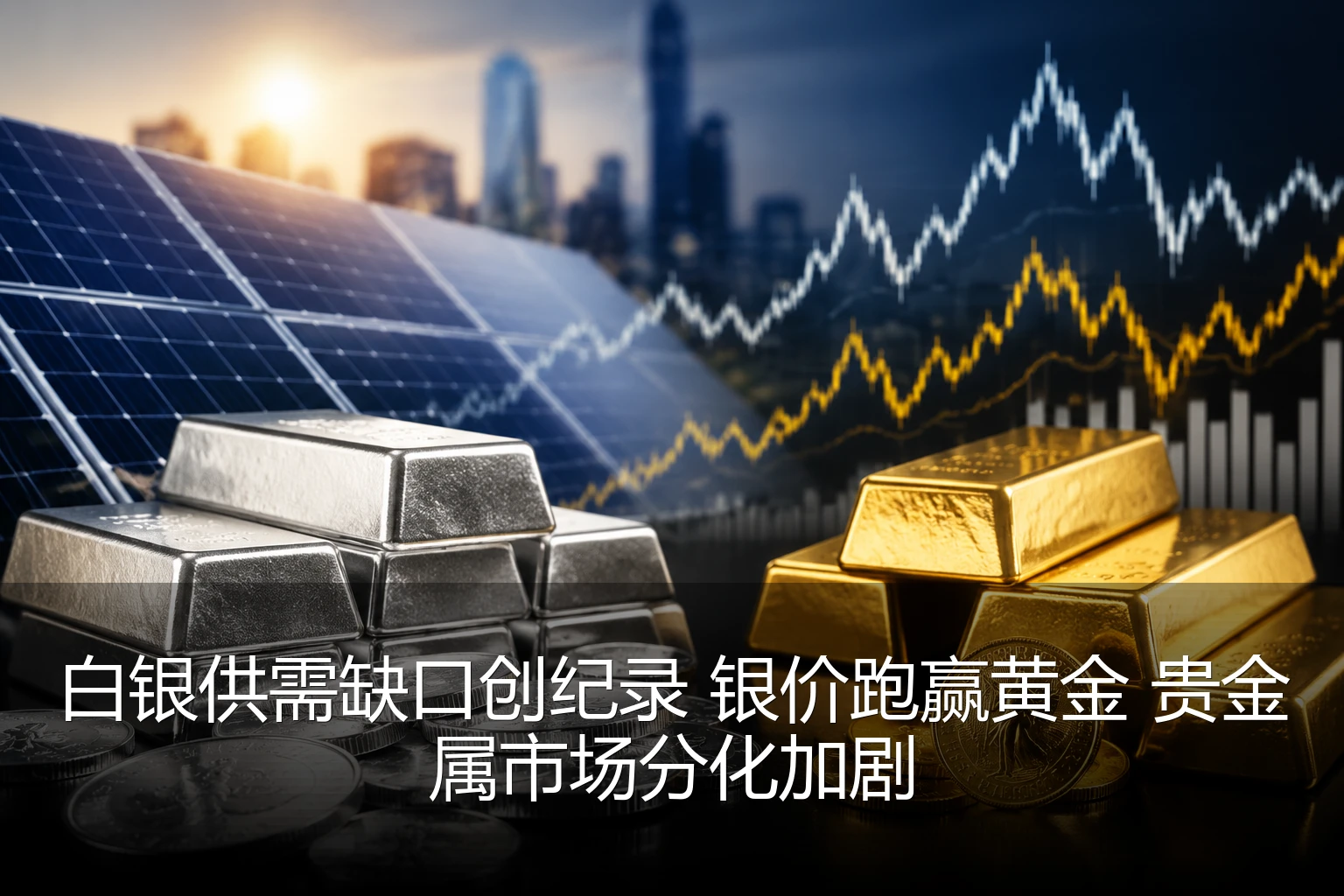
On July 31, 2026, the precious metals market showed clear divergence: spot gold consolidated narrowly around $2,400/oz, while silver, which hit a decade high last Friday, continued trading above $35/oz. As of press time, London spot silver was at $35.4/oz, up 0.6%; spot gold was at $2,408/oz, down 0.1%. The relative strength shift between gold and silver stems from markedly different fundamental drivers.
Silver supply-demand deficit hits record high
The Silver Institute's latest Global Silver Supply & Demand Report shows the global silver market will post a supply-demand deficit for the fourth consecutive year in 2026, with the deficit expected to reach 210 million ounces, a new record. The report says stagnant mine production and rising industrial demand are worsening the supply-demand imbalance.
The report notes that global silver mining capital expenditure has contracted over the past five years, limiting new capacity. Meanwhile, recycled silver supply has not increased significantly. On the demand side, silver use in solar PV, 5G communications, new energy vehicles, and AI hardware is growing rapidly, becoming a key engine of silver demand.
Solar PV becomes the main driver of silver demand
By segment, solar PV stands out. The report estimates global solar PV silver demand will reach 160 million ounces in 2026, up 18% year on year, and exceed 20% of total global silver demand for the first time. As countries accelerate energy transition and PV installations expand, silver—the core raw material for PV cell conductive paste—shows strong industrial demand resilience.
Beyond solar, electronic connectors in EVs, charging stations, and 5G base stations also create steady incremental silver demand. Silver has dual characteristics as both an industrial and precious metal, and is far more sensitive to industrial activity than gold. Therefore, amid moderate global economic recovery and rapid tech iteration, silver prices gain extra support.
Gold under pressure, silver in demand; gold/silver ratio rebounds
Compared with silver's hot industrial demand, gold's physical consumption is lukewarm. Latest WGC data show that although central bank gold buying remains strong, Q2 bar and coin investment demand fell about 8% year on year, mainly curbed by high prices. In addition, repeated shifts in Fed policy expectations kept gold range-bound. The gold/silver ratio, which briefly fell below 70, has now recovered to around 72.
Fund flows confirm this change. Since July, iShares Silver Trust, the world's largest silver ETF, saw holdings increase for five consecutive weeks, with cumulative net additions exceeding 500 tonnes; meanwhile, gold ETFs saw small net outflows. This suggests investors are shifting some safe-haven allocation toward silver with stronger industrial attributes, betting on price elasticity from the supply-demand gap.
Institutional views and investment advice
Several institutions hold cautiously optimistic views. A Julius Baer precious metals analyst said: "Silver's supply-demand fundamentals are indeed improving, but short-term gains are large and technical indicators show overbought signals. Investors should be wary of a high-level pullback, though the medium- to long-term uptrend remains intact."
- Track supply-demand data: Regularly follow the Silver Institute's quarterly reports and COMEX inventory changes as key references for silver trends.
- Watch macro factors: Fed rate cut pace and dollar moves remain the master switch for precious metals; if rate cut expectations rise, gold and silver may rally together.
- Diversify: Gold and silver have different risk-return profiles; combining gold and silver ETFs can reduce single-asset volatility.
Technically, silver has strong support near $34, with resistance at $36; gold has support near $2,380 and resistance at $2,430. Short-term, gold may consolidate while silver remains firm.
Looking to H2, the pace of global industrial recovery and clean energy policies will be key variables determining whether silver's supply-demand gap materializes. For investors seeking structural opportunities in precious metals, silver deserves close attention given its more attractive supply-demand logic and price elasticity. (End)