Precious Metals Market Turmoil: Short-term Speculation vs. Structural Shift
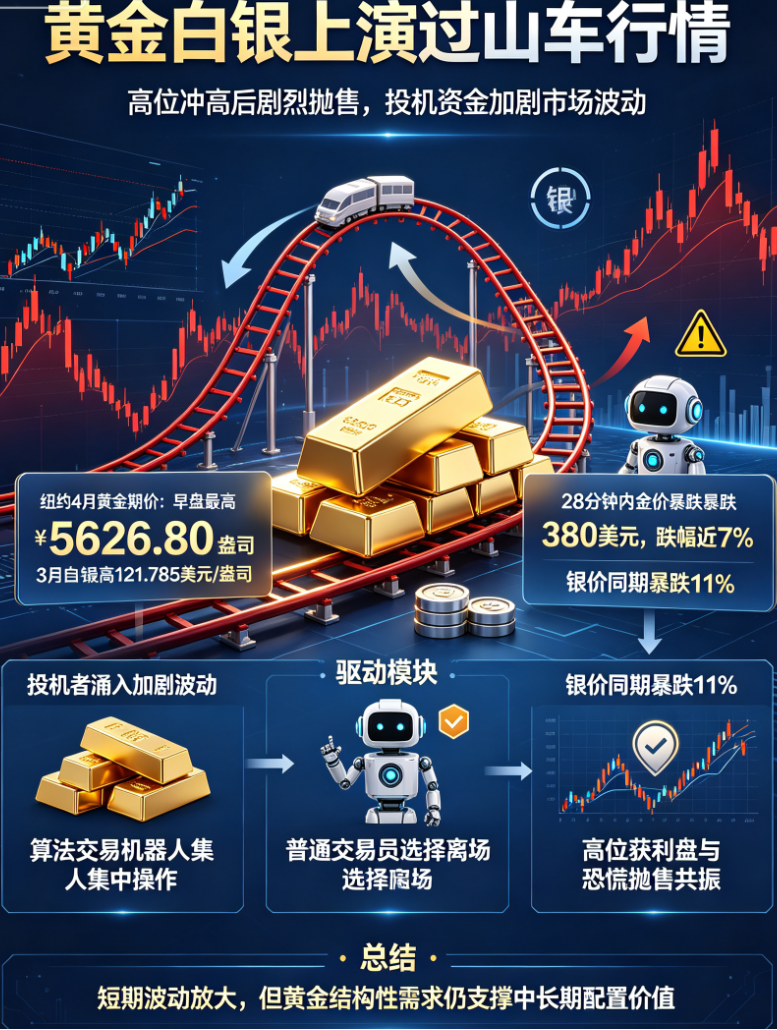
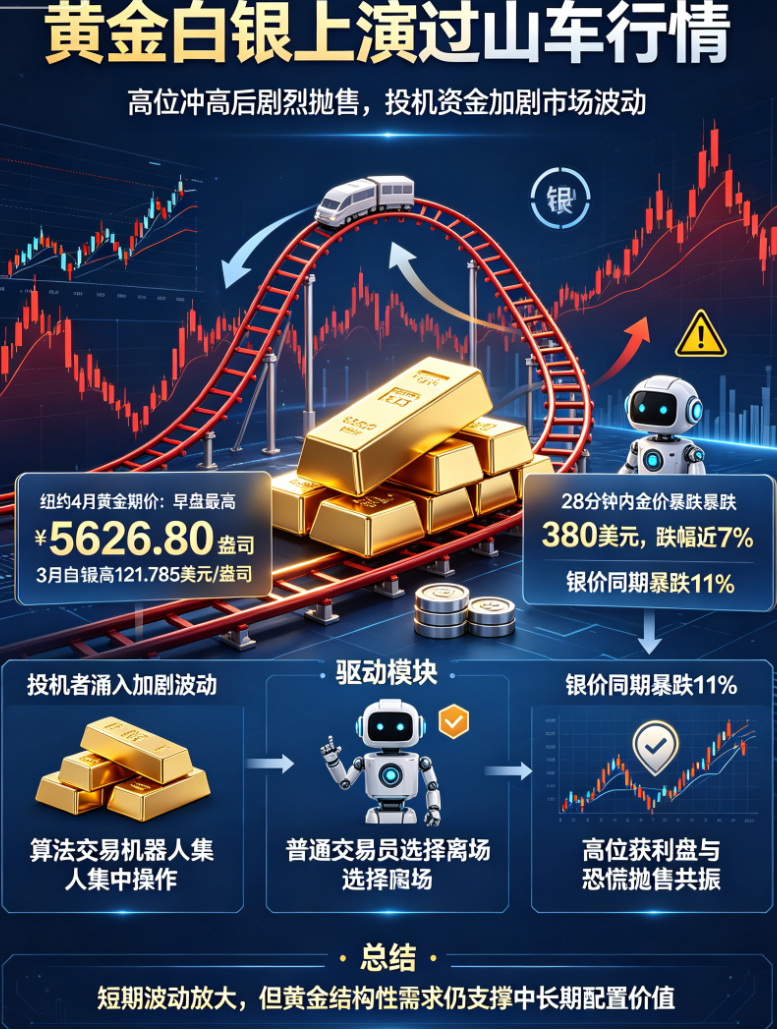
On July 29, 2026, the international gold and silver markets experienced a breathtaking roller-coaster ride. COMEX April gold futures hit a record high of $5,626.80 per ounce early in the session, while March silver futures climbed to $121.785 per ounce. However, a sharp sell-off followed, with gold plunging $380 in just 28 minutes, a drop of nearly 7%, and silver falling 11% in the same period. This sudden crash not only caught many investors off guard but also revealed the deep game dynamics in the current precious metals market.
Short-term Volatility: Speculative Inflow Amplifies Uncertainty
The recent sharp volatility in precious metals largely stems from speculative capital inflow. Kevin Grady, President of Phoenix Futures and Options, pointed out that the precious metals market has seen a parabolic rally, attracting massive participation from algorithmic trading bots. Meanwhile, many ordinary traders have chosen to stay on the sidelines. This change in market participant structure has become a key factor driving extreme volatility.
The heavy involvement of algorithmic trading bots has made the market more sensitive to price movements. When prices rise, algorithms automatically chase highs; once the market turns, programmed selling accelerates the decline. This mechanical trading pattern amplifies volatility, causing extreme price moves in a short period.
Analysts believe that focusing solely on short-term price fluctuations may overlook the significant structural shifts currently underway. Some institutional investors are reassessing gold's role and allocation in their portfolios. This repositioning is clearly reflected in the data.
Structural Shift: Gold Demand Hits Record High
The World Gold Council recently released its Q4 2025 and full-year gold demand trends report, stating that gold's rally in 2025 "cemented gold's position in the eyes of central banks, investors, and consumers." The report expects this structural adjustment to persist into early 2026.
Data shows that global physical gold demand exceeded 5,000 tonnes for the first time in 2025, a record high. Gold prices set new records on 53 trading days, with robust demand pushing the average annual price to $3,431 per ounce, up 44% year-on-year. These figures indicate that gold is no longer just a safe-haven asset but is becoming a core component of global asset allocation.
Notably, although central bank gold buying slowed in 2025 compared to the extraordinary pace of the past three years, it remained at historically high levels, reaching 863 tonnes—far above the long-term average. The World Gold Council attributes this to structural factors such as high debt, persistent geopolitical risks, and declining confidence in traditional reserve assets, which will continue to drive central bank gold purchases.
Long-term Outlook: Gold's Value as a Portfolio Stabilizer
Based on gold's market performance in 2025, its appeal as a portfolio stabilizer is increasingly evident. Amid heightened volatility in traditional assets, gold demonstrates unique risk-hedging capabilities. The World Gold Council expects gold prices to remain strong in 2026, reflecting sustained market recognition of gold's long-term value.
For investors, it is crucial to understand the relationship between short-term volatility and long-term structural shifts in precious metals. While short-term speculation exacerbates volatility, it also creates entry opportunities for long-term investors. Those who can identify and capitalize on structural trends are more likely to achieve excess returns in global asset allocation.
Conclusion
The precious metals market plunge on July 29, 2026, reflects both the destructive power of short-term speculative waves and the ongoing structural transformation of the gold market. Amid rising global economic uncertainty, gold's role as a store of value and risk-hedging tool is being redefined. Continued central bank accumulation, institutional strategy adjustments, and robust consumer demand together form a solid long-term foundation for the precious metals market. Investors should view market volatility with a long-term perspective, seize structural opportunities, and achieve steady asset growth.