Risk Aversion and Demand: Analysis of Strong 2025 Precious Metals Market Trends
Introduction
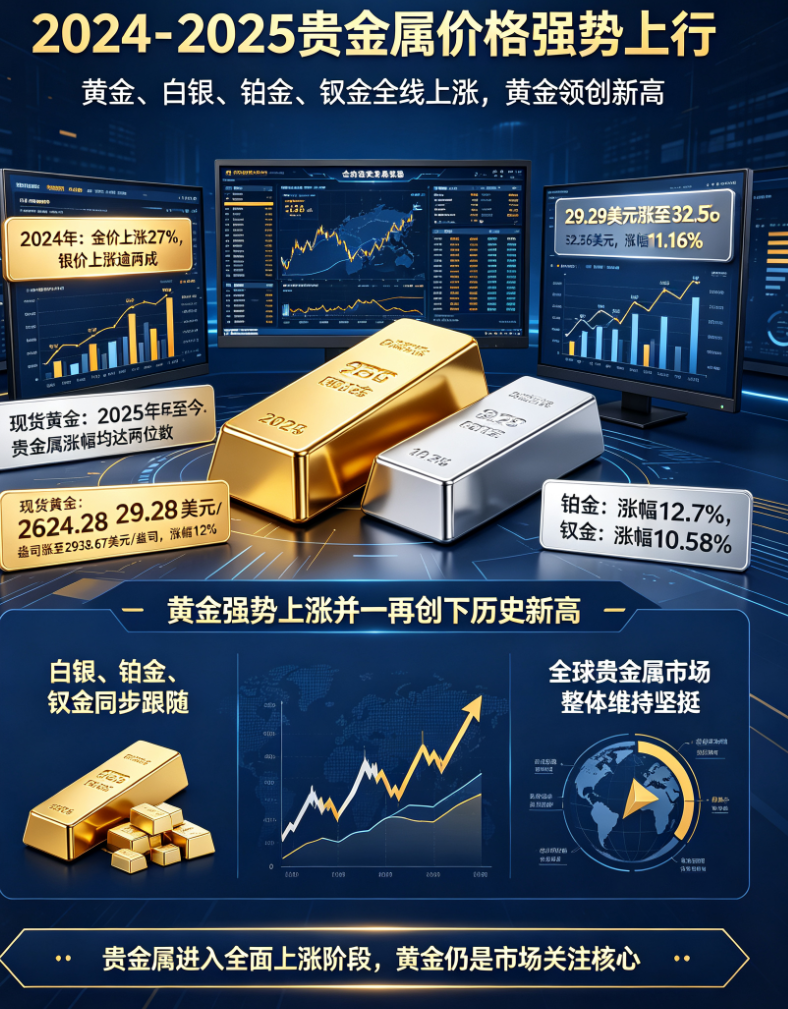
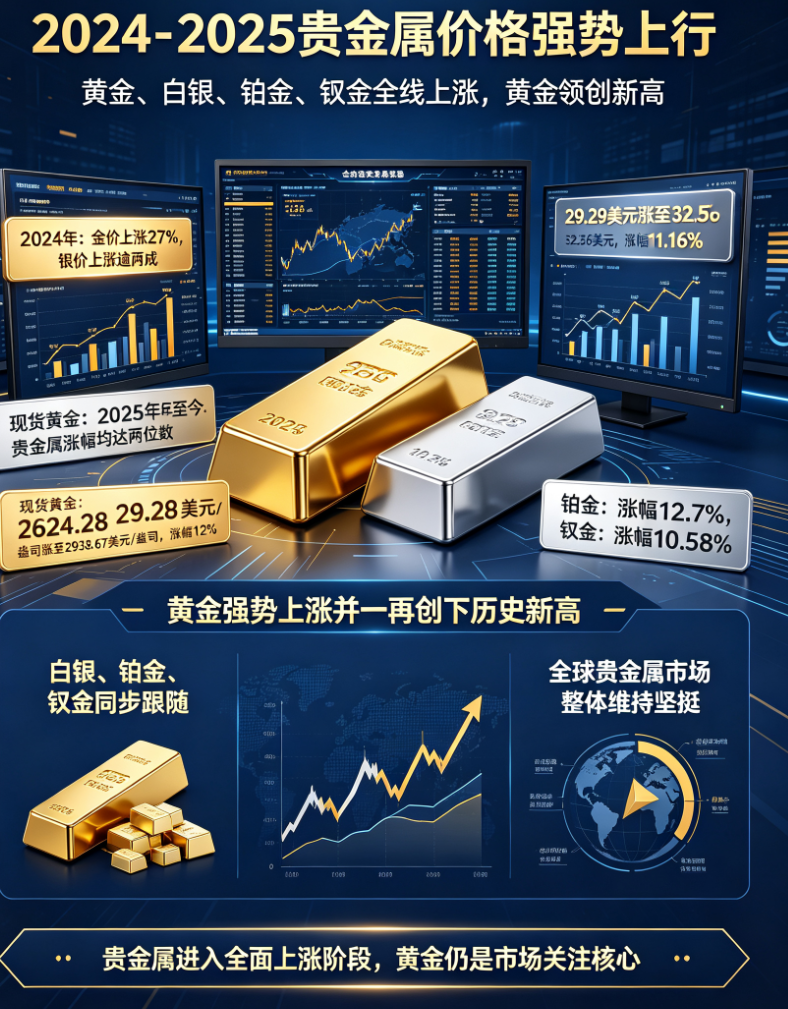
In 2024, the global precious metals market delivered remarkable results. Gold prices rose 27% for the year, silver gained over 20%, and platinum and palladium also performed well. Entering 2025, this strong momentum has not only continued but accelerated. Spot gold hit new highs repeatedly, while silver, platinum, palladium and other metals posted double-digit gains. Given the complex and changing global economy, why has the precious metals market remained resilient? What are the driving factors? This article examines them from the perspectives of safe-haven demand, industrial applications, and supply-demand structure.
I. Global Precious Metals Market Overview and Strong Performance
As of February 11, 2025, the international precious metals market has performed exceptionally well. Spot gold rose from USD 2,624.28 per ounce at end-2024 to USD 2,938.67, a gain of 12%; New York silver also rose from USD 29.29 to USD 32.56, up 11.16%. Meanwhile, platinum and palladium posted gains of 12.7% and 10.58% respectively, showing broad-based strength.
This rally is not an isolated event, but the result of changes in the global macroeconomic environment, heightened geopolitical risks, and market sentiment resonance. Notably, precious metals achieved double-digit gains early this year, indicating strong investor preference for these assets.
II. Safe-Haven Demand: Primary Driver of Precious Metal Prices
When discussing the reasons for strong precious metal prices, safe-haven demand is undoubtedly the top factor. Current global economic uncertainties are rising significantly, with multiple risk factors interweaving, pushing investors toward these traditional safe assets.
2.1 Trade Tensions Spark Market Turmoil
The U.S. government's escalating tariff policies have cast a shadow over the global economy. Tariff threats not only directly affect international trade order but also trigger concerns about supply chain disruptions and inflationary pressures. The Trump administration's promises on tax cuts and immigration reform have further intensified worries about deteriorating U.S. fiscal conditions—tax cuts may reduce government revenue, while immigration reforms could affect labor market supply and demand, potentially reviving inflation.
2.2 Global Debt Issues Continue to Fester
The global debt burden, especially the rising U.S. federal debt, has become a lingering market concern. As of early 2025, total U.S. federal debt exceeded USD 34 trillion and is still accelerating. High debt levels not only imply rising future interest rates but could trigger cascading effects such as sovereign credit rating downgrades. In this environment, holding hard assets like gold and silver becomes an important hedge against sovereign credit risk.
2.3 Geopolitical Risks Provide Sustained Support
Geopolitical risk events such as the Ukraine crisis and Middle East tensions continue to fuel market risk aversion. These conflicts not only directly impact global energy and food supplies but also increase uncertainty in global security patterns. Against a backdrop of high geopolitical risks, precious metals' appeal as safe-haven assets naturally rises.
2.4 Uncertainty over USD and Fed Policy
Periodic adjustments in the U.S. dollar index and market divergence over the Fed's future monetary policy path also support precious metal prices. Although the Fed hinted at a possible slowdown in rate hikes in late 2024, repeated inflation data and labor market resilience make the timing of rate cuts uncertain. Amid this policy uncertainty, the allocation value of gold and other precious metals becomes salient.
III. Industrial and Jewelry Demand: Diversified Support
Beyond safe-haven demand, widespread demand for precious metals in industries such as jewelry, automotive, and other sectors also supports prices.
3.1 Jewelry and Investment Demand Drive Gold Consumption
Gold is not only an investment tool but also a core raw material for the global jewelry industry. In major consumer markets like China and India, demand for gold jewelry remains strong. Especially during traditional festivals and wedding seasons, gold jewelry consumption rises significantly. Meanwhile, central banks continue to increase gold reserves, providing solid support for prices.
3.2 Silver's Industrial Attributes Shine
Silver is increasingly used in industrial fields such as photovoltaics, electronics, and medicine. As the global energy transition accelerates, photovoltaic installations continue to climb, and silver, as a key conductive material in solar panels, sees robust industrial demand growth. This dual safe-haven and industrial attribute gives silver unique investment value within the precious metals sector.
IV. Structural Scarcity and the Future of Platinum Group Metals
Platinum and palladium, as representatives of platinum group metals, have price trends more influenced by specific industry supply-demand changes. Both metals are scarce, difficult to mine, and costly, resulting in relatively limited market supply.
4.1 Platinum: Value Revaluation Driven by Multiple Demands
Platinum's applications in automotive catalysts, jewelry manufacturing, and fuel cells provide stable support for demand. Particularly with the rapid development of the hydrogen energy industry, platinum's catalytic role in proton exchange membrane fuel cells (PEMFC) has become indispensable. Although platinum prices were previously under pressure due to expectations of electric vehicles replacing traditional internal combustion engine cars, the fundamentals are gradually improving thanks to a recovery in high-end jewelry consumption and breakthroughs in the hydrogen energy chain.
4.2 Palladium: Beneficiary of Stricter Auto Emission Standards
Palladium is widely used in gasoline vehicle exhaust purification systems. As global environmental standards tighten and auto production grows steadily, demand for palladium remains high. Currently, palladium prices hover around USD 985 per ounce, a considerable gain from last year's lows. Commerzbank forecasts that palladium prices could rise to USD 1,150 per ounce by end-2025, based on optimistic expectations for auto industry demand.
4.3 Supply-Side Constraints
Major producing regions for platinum and palladium—South Africa and Russia—face long-standing challenges such as mine aging, power shortages, and rising labor costs, leading to sluggish production growth. This supply-side rigidity contrasts with steady industrial demand growth, providing structural support for platinum group metal prices.
Conclusion: Bull Market Fundamentals Remain Solid
In summary, the strong performance of the precious metals market in 2025 results from the interplay of safe-haven demand, industrial demand, and structural supply constraints. Against a backdrop of persistent global trade tensions, escalating debt problems, and high geopolitical risks, precious metals' appeal as safe-haven assets is unlikely to be shaken in the near term. Meanwhile, silver's expanding industrial applications, platinum's strategic role in the hydrogen energy sector, and palladium's key function in automotive environmental protection all provide solid physical demand foundations.
Looking ahead, as the global economic landscape continues to undergo profound adjustments, the precious metals market is expected to remain active. While focusing on price fluctuations, investors should deepen their understanding of the underlying fundamental drivers and grasp the strategic value of precious metals in asset allocation. Whether as a safe-haven tool or industrial material, precious metals' prospects in 2025 and beyond are worth watching.
(Total: 1,471 characters)