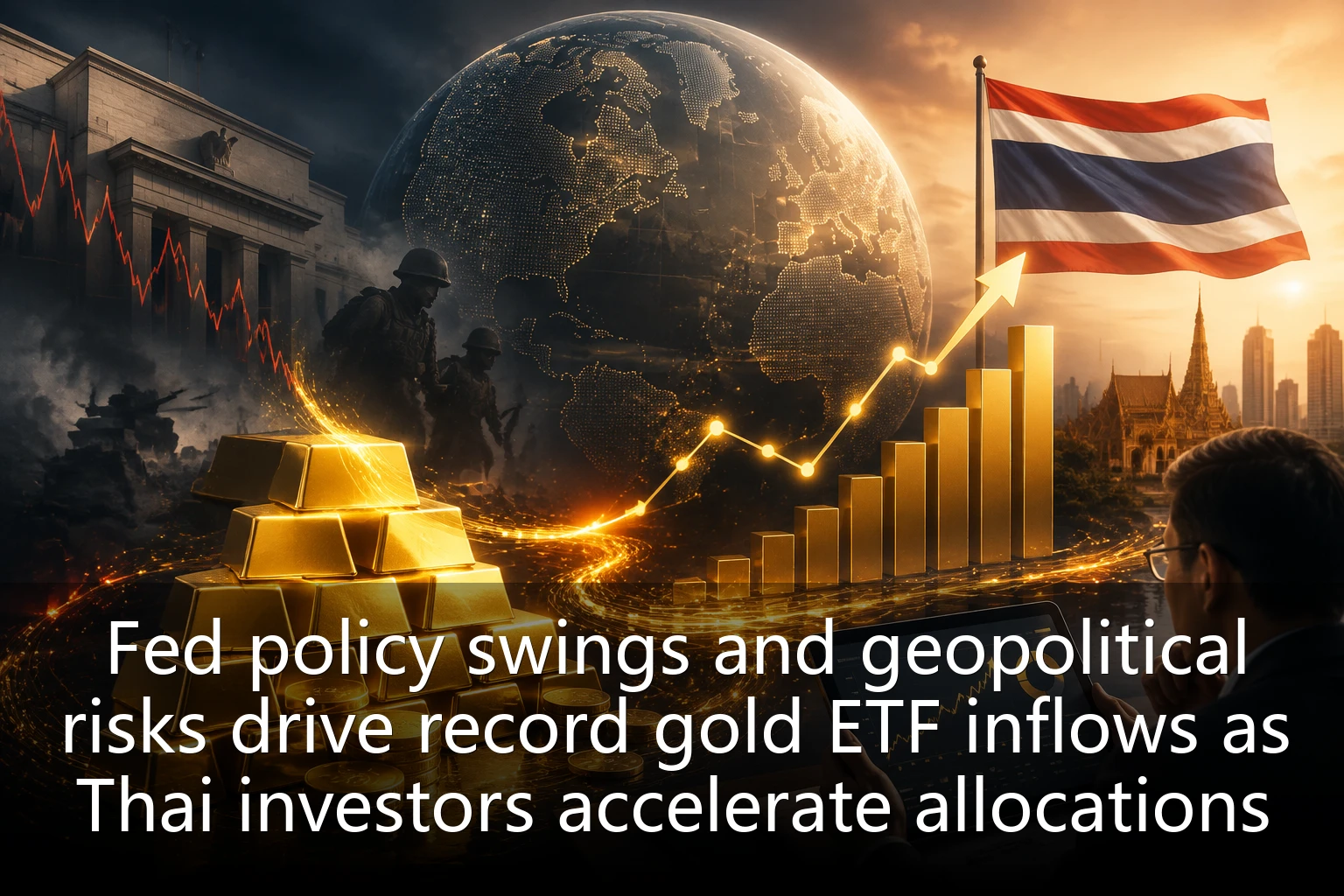
Market Uncertainty Soars, Gold ETFs Become Safe Havens for Capital
As of August 3, 2026, global financial markets are being swayed by two powerful forces: the Federal Reserve's difficult balancing act between sticky inflation and signs of an economic slowdown, and the protracted geopolitical conflicts in Eastern Europe and the Middle East. Against this complex macro backdrop, gold—the traditional safe-haven asset—is once again demonstrating its irreplaceable strategic allocation value. The latest data shows that global gold exchange-traded funds (ETFs) recorded their largest weekly net inflows since the second quarter of 2026 over the past week, reflecting deep concern among institutional and retail investors about the current market environment.
Macro Fog: The Fed's Hawkish-Dovish Wobble
Although markets broadly expected the Fed to send relatively dovish signals at its late-July meeting, the latest economic data has once again clouded the future policy path. The revised US second-quarter GDP released last week showed the economy remains resilient, but an unexpected month-on-month uptick in the core PCE price index has reignited fears of sticky inflation. This challenges the logic of the "Fed put," prompting investors to reprice expectations for the September meeting and beyond. The US Dollar Index consequently experienced sharp swings late last week, while gold quickly rebounded after a brief dip, highlighting its unique value as a hedge against monetary policy uncertainty.
Geopolitical Dark Clouds Gathering
Meanwhile, geopolitical risk premiums are rising at a visible pace. Beyond the protracted Russia-Ukraine conflict, tensions in a major Middle Eastern oil-producing region have recently escalated again, with attacks on critical infrastructure raising concerns about energy supplies and broader regional stability. These events not only directly stimulate safe-haven buying but also have a deeper impact: they could exacerbate the already fragile global inflation situation through supply chain disruptions, creating a stagflationary macro feedback loop—precisely the environment in which gold assets thrive most.
Thailand Perspective: Local Investors Accelerate Hedging
In the Thai market, this wave of risk aversion is particularly pronounced. As international gold prices stabilize above $2,700 per ounce and build upward momentum, trading volumes and net subscription shares of Thai local gold ETFs have hit multi-month highs. Analysts point to two driving factors behind this phenomenon:
- Hedging and Risk Mitigation: With the Thai baht's exchange rate against the US dollar experiencing heightened volatility recently, holding baht-denominated gold ETFs not only allows investors to benefit from rising gold prices but also effectively hedges against potential losses from local currency depreciation, providing dual protection for their assets.
- Convenient Investment Channels: Through gold ETFs listed on the Stock Exchange of Thailand (SET), local investors can efficiently and cost-effectively participate in the global gold market without needing to open overseas accounts or deal with the complexities of physical gold storage. The platform's convenience significantly enhances investors' capital mobilization efficiency during volatile markets.
Fund flow data shows that mainstream gold ETF products in the Thai market consistently attracted net interest in the last week of July and early August, aligning with the broader global recovery trend in precious metals ETFs. However, the pace of inflows into the Thai market was notably faster than the regional average, underscoring the strong risk-averse sentiment among the country's investors.
Outlook: Watching for Policy and Geopolitical Inflection Points
Looking ahead, the precious metals market's focus will center on the upcoming US July non-farm payrolls report and subsequent inflation data. Any signals indicating economic weakness or stubborn inflation could further solidify gold's safe-haven status. Additionally, the evolution of geopolitical situations remains an unpredictable variable that could trigger a new wave of safe-haven demand at any time.
For Thai investors, the current market environment underscores the importance of asset diversification and hedging tools. In an era of heightened global macro uncertainty, maintaining a certain precious metals exposure through gold ETFs is not only a strategy to capture potential gold price upside but also a crucial line of defense to protect investment portfolios from extreme risk shocks. Market analysis suggests investors should closely monitor global central bank policy dynamics and geopolitical news, and flexibly adjust their allocation ratios in Thai gold ETFs based on their own risk tolerance.